Short answer: in the UK in 2026, a professional brochure website typically costs £1,500–£4,000, a business website with custom features £4,000–£10,000, an e-commerce store £6,000–£20,000+, and a custom web application £15,000 upwards. The exact figure depends on how many pages you need, how much of the design is bespoke, what the site has to do, and how much content and SEO is included.
Below is an honest breakdown of what those numbers actually buy, what drives the price up or down, the ongoing costs people forget, and how to set a budget you will not regret. We build websites for businesses across Belfast, Northern Ireland and the UK, so these ranges reflect real projects — not a sales pitch.
Website cost by type (2026 UK ranges)
Use this as a starting point, not a quote. Every project moves within its range depending on scope.
| Type of website | Typical UK price (2026) | Best for |
|---|---|---|
| One-page / starter site | £750–£1,500 | Sole traders, a simple online presence |
| Small business / brochure site | £1,500–£4,000 | Most small businesses needing a few pages and a contact form |
| Business site with custom features | £4,000–£10,000 | Bespoke design, booking, integrations, more content |
| E-commerce store | £6,000–£20,000+ | Selling products online, payments, stock |
| Custom web application / platform | £15,000–£60,000+ | Booking systems, portals, SaaS, complex logic |
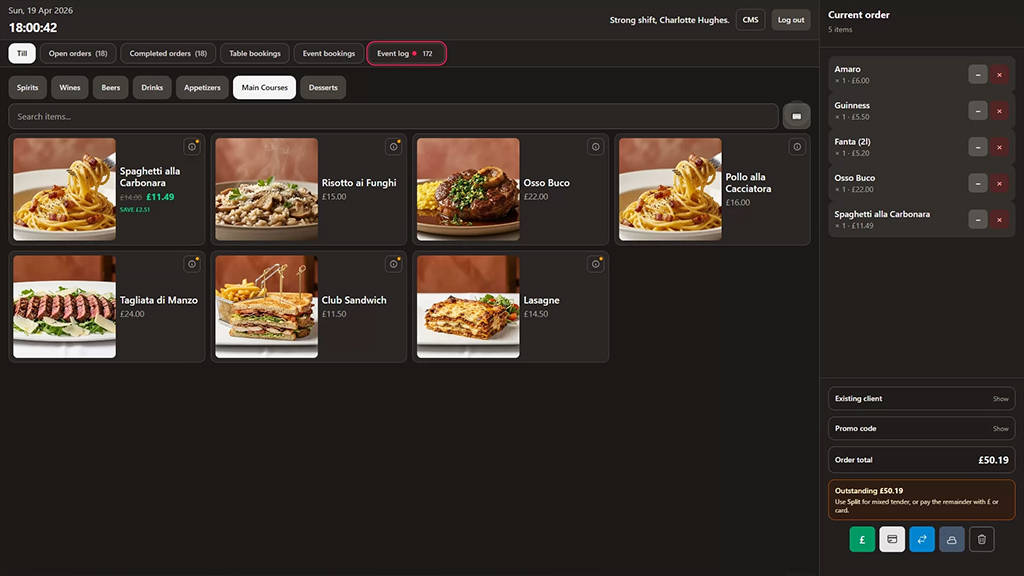
If you sell online, our e-commerce website development page covers what changes the price for a shop. If you are a smaller business weighing up your first proper site, see small business websites. And if you run a restaurant or takeaway, a commission-free ordering system is often a better investment than a plain brochure site.
Already have a site that underperforms? A website redesign is usually better value than starting from scratch. Need software rather than a website — a portal, booking system or SaaS? That is custom web application development, which sits at the top of the ranges above. And if you are local, here is how we approach web design in Belfast.

What actually determines the price
Two sites can both be "five pages" and cost wildly different amounts. Here is where the money really goes:
- Custom vs templated design. A bespoke design built around your brand takes far more time than dropping content into a theme.
- Functionality. A contact form is cheap. Booking, logins, payments, dashboards, search and integrations are where cost climbs.
- Number of pages and content. More pages means more design, build and copywriting — especially if you need the content written for you.
- Integrations. Connecting to a CRM, accounting system, payment provider or third-party API adds development and testing.
- Performance, accessibility and SEO. A fast, accessible, search-ready site is more work than one that merely looks fine — and it pays back in traffic and conversions.
- Who builds it. A DIY builder, a freelancer and a studio with a full team are three different cost (and risk) profiles.
One-off build vs ongoing costs
The build is a one-off; a website also has running costs. Budget for these so nothing surprises you later:
| Ongoing item | Typical cost | Notes |
|---|---|---|
| Domain name | £10–£20 / year | Your web address (e.g. yourbusiness.co.uk) |
| Hosting | From a few £ / month | More for higher traffic or heavier apps |
| Care plan (optional) | £50–£300 / month | Updates, backups, security, small changes |
| Email, tools, marketing | Varies | Business email, analytics, paid ads, etc. |
A care plan is optional but worth it for most businesses: it keeps the site secure and current, and means small changes get done without a new quote each time.

Freelancer vs agency vs DIY builder
DIY builders (Wix, Squarespace, etc.) are cheapest upfront but cost you time and carry monthly fees and design and feature limits. Fine for the simplest needs.
Freelancers are often the best value for smaller, well-defined projects, though availability and continuity can be a risk if they are a one-person operation.
Studios and agencies cost more but bring a team, a process, and continuity — which matters when the site is important to your business or the build is complex. If you are weighing platforms too, our guide on WordPress vs Laravel explains when each makes sense.
Hidden costs to watch for
- Content and photography — if you cannot supply copy and images, factor in creating them.
- Premium plugins or licences — some features rely on paid third-party tools with annual fees.
- Stock and transaction fees — e-commerce has payment processing fees on every sale.
- "Cheap now, expensive later" — a bargain build on a fragile setup can cost more in fixes and a rebuild down the line.
How to set a realistic budget
Start from what the website needs to achieve, not a round number. A site that brings in enquiries or sales is an investment with a return, not a cost to minimise. A practical approach:
- List the pages and features you genuinely need on day one (and park the "nice to haves").
- Decide how much of the design must be bespoke versus templated.
- Add a sensible allowance for content, ongoing hosting and a care plan.
- Get an itemised quote so you can see exactly what each part costs — and trim scope, not quality, if you need to.
How we price at WeeSite
We quote per project with an itemised breakdown, so you can see what each part costs and make informed trade-offs. The ranges above are our honest starting points; once we understand your goals, pages and functionality, we give you a fixed price and a realistic timeline. We build fast, accessible, search-ready sites — and our own site is the demo.
Based in Belfast and working with businesses across Northern Ireland and the UK, we are happy to talk through your project with no obligation. Get a quote and we will come back with clear numbers.